


Many dog foods on the market make claims about being good for allergies, but how well do these claims hold up? How common are dog food allergies? And is hypoallergenic dog food right for your dog? To learn the truth about food allergies in dogs and what hypoallergenic dog food really means, keep reading.
Are Dog Food Allergies to Blame?
While people are often quick to blame a dog's skin problems on what he eats, the truth, says Tufts University's Cummings Veterinary Center, is that food allergies in dogs are not all that common. The most common causes of allergies in pets are environmental including fleas, dust mites, grass, pollen, and other environmental causes. If your pup's allergies tend to clear up during the winter or become worse at the height of flea season, then it's likely his allergies are environmental. But because actual food allergies can cause skin and ear problems similar to those caused by environmental allergies, it's up to your veterinarian to help you rule out other types of allergies for certain before determining whether your dog's food is to blame.
 Food Allergies vs. Food Intolerance
It's also important to note the difference between an allergy and an intolerance. If your dog is unable to tolerate a certain type of food, such as lactose, this means he lacks the digestive enzyme necessary to properly digest that food, and gastrointestinal problems, such as vomiting and diarrhea, may result. An allergy, on the other hand, is an immune response. When your dog comes into contact with something he's allergic to, his immune system goes into overdrive attacking the allergen, resulting in skin problems, itching, or hair loss. If your dog is suffering from a food intolerance rather than a food allergy, then hypoallergenic dog food is unlikely to help. We recommend seeing your veterinarian to get the best possible solution for your pet.
What Causes Food Allergies?
According to Tuft University, "Food allergies occur when an animal's immune system misidentifies a protein from a food as an invader rather than a food item and mounts an immune response. The end result of this response can be itchy skin or ear and skin infections in some pets, while it may cause vomiting or diarrhea in others." Once an immune response is triggered, it grows stronger every time that type of protein enters the body, which means your dog's allergy may worsen every time he eats that particular food.
Common Allergens in Dog Food
The most common foods to trigger an allergic response in dogs are animal proteins including chicken, beef, dairy, and eggs, says Tufts. Lamb, pork, and fish are less likely to cause allergies, although it is possible. While some dogs have proven to be allergic to wheat and corn, this is actually much more rare than common wisdom would have you believe. Instances of other grains, such as oats or rice, causing allergies are rare to nonexistent.


맛있는 팁
Diagnosing Dog Food Allergies
 Unfortunately, there are no reliable ways to test your dog for food allergies. The only way to determine which foods your dog is allergic to is through the process of elimination. Typically, your vet will prescribe a special, limited-ingredient dog food containing types of meat and carbohydrates that aren't in your dog's usual meals and seeing how he does on it. If your dog's symptoms clear up on this special meal plan, after a period of time your vet may have you switch your dog back to his old food to see if the allergy symptoms reappear. If they do, that will confirm that you're dealing with a food allergy.
The next step is to identify the specific ingredient causing the allergic reaction in your dog. This requires changing back to the limited ingredient food. Once your dog's symptoms clear up, your vet may then have you add ingredients from his old food back to his meals one at a time and monitor the results in order to identify which ingredients trigger an allergic reaction.
During this elimination trial, it's extremely important to only feed your dog the prescribed food. The most frequently mentioned reason for failure in determining allergies in elimination tests is household sabotage. This consists of giving your dog food that was not directly recommended by your veterinarian including dog treats, table scraps, different dog foods, etc. During these trials, dogs can't have even one of these in order for the test to be effective at diagnosing the allergy. To put it in perspective, a human that is allergic to nuts cannot have even a single peanut. The same is true of your dog. To fully determine the cause of dog food allergies (if any does exist), you must be as strict as possible, and that includes everyone else in your household too. It's hard when your pup sits there with his big begging eyes, but it is worth it if you can determine if an allergy exists. These elimination tests typically take about 12-weeks after which your veterinarian will verify that your dog isn't experiencing any of the previous allergy signs.
Self-Diagnosis
It is important that if you believe your dog is experiencing allergies of any sort, food or environmental, that you check with your veterinarian to help you best diagnose your pup. Self-diagnosis can be unhelpful or even dangerous in certain cases. Because food allergies and environmental issues present some of the same signs, it is hard to know which is the cause without proper testing. Unlike in humans, dog allergy tests are much less reliable, which is why your veterinarian will likely give you specific instructions on what to expose your dog to and how to monitor his health over time to determine the specific cause for his health issues.
You may be tempted to do a limited-ingredient diet (LID) on your own as well. This is also not recommended for a couple of reasons. The first being the difference between intolerance and allergies. Without proper testing, it is hard to know the real cause. The second reason why LIDs aren't always great in self diagnosing your dog's condition is that even limited-ingredient foods can be subject to allergen contamination. For instance, if you suspect that your dog is allergic to chicken, and you switch him over to something like lamb or venison, he might start feeling better, but because many food companies will use the same machinery to make their chicken product dog foods and their lamb-filled food there is a chance that some of the chicken allergens make it into your dog's lamb food. Like mentioned before, any introduction of an allergen, even a small amount, can affect your dog overall. This is why it is best to follow your veterinarian's strict instructions when asking about allergies.
Hypoallergenic Dog Food
If food allergies are determined, your veterinarian may recommend hypoallergenic dog food and treats for your dog to eat. These types of foods take special precautions to avoid being cross-contaminated. Hypoallergenic dog foods may also be hydrolyzed, meaning that they go through a process of breaking down proteins on a molecular level so that they are too small for the dog's body to recognize them as allergens. This is often a prescription dog food, so you will need to talk to your veterinarian about this as an option for your dog.
While some companies sell over-the-counter foods that claim to be good for allergies—and some may contain supplements that can be helpful in controlling environmental allergies—these foods are not ideal for treating food allergies. As with limited ingredient foods, there is nothing to guarantee that your dog won't become allergic to them in the future. These dog foods are also less regulated than prescription dog food and as such, might contain other contaminants that trigger an allergic response. It's also best to be wary of any hypoallergenic claims made by over-the-counter grain-free dog foods. Remember, it's animal proteins, not grains, that are most likely causing food allergies in dogs.
Dog food allergies are tricky business. Fortunately, they're also the type of allergy your dog is least likely to suffer from. If your dog is showing signs of allergies, talk to your vet before making any changes to his food. Even if it turns out that he does have a food allergy, changing his food without a vet's supervision could make it more difficult to diagnose.

관련 제품

어덜트 퍼펙트 다이제스천 스몰 바이트(치킨, 현미, 통귀리)
사이언스 다이어트의 혁신적인 영양이 소화기와 마이크로바이옴의 건강을 돕습니다. 작은 사료 알갱이로 제조된 맛있는 사료입니다.

어덜트 퍼펙트 다이제스천 스튜(주식캔)
힐스의 독자적인 프리바이오틱스 배합인 액티브바이옴+ 적용으로, 반려동물만의 특별한 장내 미생물(마이크로 바이옴) 균형을 유지해 건강한 소화와 반려견의 전반적인 건강을 돕습니다.

어덜트 퍼펙트 웨이트 스튜(주식캔)
반려견의 안전하고 효과적인 체중 감량 및 건강한 체중 유지와 제지방 근육 유지를 지원
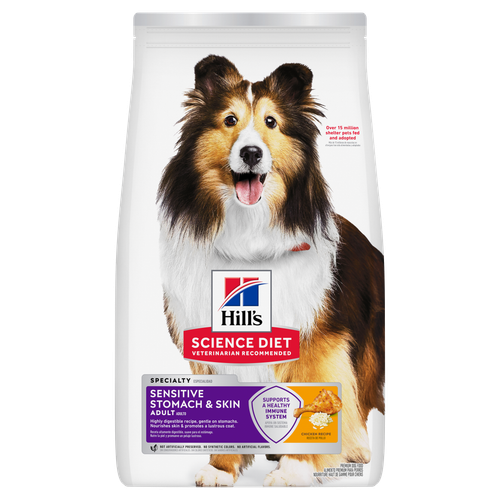
어덜트 센서티브 스토막&스킨 치킨 레시피
힐스 사이언스 다이어트 어덜트 센서티브 스토막 앤 스킨 건사료는 최적의 소화 건강을 제공하는 동시에 피부에 영양을 공급하고 윤기 있는 피모를 촉진합니다.


반려동물 모르게 다이어트를 시켜보세요
저칼로리 포뮬러로 반려견의 체중 관리에 도움을 드립니다. 근육량 증가에 필요한 고품질 단백질이 풍부하게 함유되어 있으며, 풍미와 영양을 모두 갖춘 식사를 위해 엄선된 재료로 만들었습니다. 임상적으로 입증된 항산화 성분인 비타민 C+E는 건강한 면역 체계를 증진하는 데 도움을 줍니다.
반려동물 모르게 다이어트를 시켜보세요
저칼로리 포뮬러로 반려견의 체중 관리에 도움을 드립니다. 근육량 증가에 필요한 고품질 단백질이 풍부하게 함유되어 있으며, 풍미와 영양을 모두 갖춘 식사를 위해 엄선된 재료로 만들었습니다. 임상적으로 입증된 항산화 성분인 비타민 C+E는 건강한 면역 체계를 증진하는 데 도움을 줍니다.